Rural communities across the United States face persistent barriers to healthcare access. Limited broadband infrastructure, low digital health literacy, transportation challenges, and workforce shortages continue to widen the gap between rural residents and the care they need.
Access to healthcare today depends not only on internet availability, but on the ability to navigate it effectively.
AMSA’s Rural Health initiative exists to close that gap. Through structured student leadership, state-based partnerships, and scalable digital health models, we are building a national framework that strengthens rural access to care while preparing the next generation of physicians to lead.
Our Approach
AMSA’s Rural Health strategy is built around three interconnected pillars:
Digital Health Access
Expanding telehealth and digital healthcare navigation through the Digital Rural Health Corps.
Workforce Development
Building a sustainable rural physician pipeline through exposure, mentorship, and leadership opportunities.
National Engagement
Highlighting rural health progress, partnerships, and student leadership through ongoing communications and collaboration.
Featured Initiative: Digital Rural Health Corps
The Digital Rural Health Corps (DRHC) trains medical and pre-medical students as Digital Health Navigators and deploys them into rural and underserved communities to provide hands-on support with telehealth, patient portals, mobile health applications, and online prescription services.
Launched in 2024 in Ohio, the program now operates across multiple states and continues to expand through student-led leadership and community partnerships.
Overview
Program at a Glance
The AMSA Digital Rural Health Corps (DRHC) was established to address healthcare disparities in rural communities, particularly those affected by limited broadband access, low digital literacy, and barriers to telehealth engagement.
By training and deploying medical and pre-medical students as Digital Health Navigators, the initiative empowers individuals in underserved communities through:
- Telehealth education
- MyChart and patient portal guidance
- Mobile health app navigation
- Online prescription services
- Digital literacy assessment using a modified eHEALS scale
- Community-centered outreach
Our mission is to develop scalable, student-driven solutions that bridge the gap between rural populations and equitable digital health access, using a replicable model designed to ensure continuity as students graduate and leadership transitions occur across states.
Equitable healthcare requires more than access to technology. It requires trusted support systems that help individuals use those tools confidently and independently.
| Launched | 2024 (Ohio pilot) |
| Active states | Ohio, Georgia, Illinois |
| Students trained | 300+ medical and pre-medical students |
| Deployment sites | FQHCs (soon via partnership with Georgia AHECs), rural libraries, pharmacies, senior centers, farmers markets, health fairs, rural hospitals |
| Core tools taught | MyChart, telehealth platforms, mobile health apps, online prescription services |
| Assessment tool | Modified eHEALS digital health literacy scale |
The Framework
The Digital Rural Health Corps operates through a structured four-phase model designed for replication across states.
Before deployments, the DRHC team conducts a structured discovery process:
- Identifying rural regions with documented digital health access gaps
- Mapping medical student engagement in the region
- Locating community access points such as libraries, senior centers, FQHCs, pharmacies, and AHEC-connected sites
- Assessing site coordination capacity
- Reviewing state-level rural health funding streams to align efforts
This ensures each deployment is strategic, sustainable, and community-informed.
Students complete a formal training curriculum prior to deployment, which includes:
- Digital health navigation fundamentals
- MyChart setup and troubleshooting
- Telehealth platform access
- Online prescription tools
- Digital health literacy assessment using eHEALS
- Communication, consent, and patient privacy
- Cultural fluency within rural communities
Students practice mock virtual encounters and learn to create clear, understandable digital support plans tailored to individual needs.
Students are deployed to pre-vetted community access points where they:
- Conduct brief digital literacy assessments
- Identify individual barriers to telehealth use
- Provide one-on-one support using the resident’s own device
- Offer empathetic guidance to build trust and confidence
Deployments take place in trusted community spaces rather than requiring residents to navigate clinical settings.
Operational learnings have shown:
- Students are more consistent when modest stipends are available
- Sites with dedicated coordinators sustain programming more effectively
- Institutional knowledge compounds with each deployment cycle
The DRHC is actively exploring funding partnerships to support student stipends and site coordination costs as expansion continues.
States & Leadership
National Digital Rural Health Fellow
Ohio – Pilot State
Georgia – Expansion State
Illinois – Student-Initiated Expansion
National Intern Support Team
Kendra Robinson, MD
drhcfellow@amsa.org
Provides national coordination, expansion strategy, curriculum oversight, and cross-state leadership continuity.
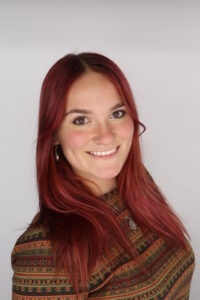


State Lead: Essence Dobbelare-Buchanan
Ohio UC Committee Members: Nour Louisa Badaoui, Faith Tiu
The Ohio pilot operated across five rural counties and established the foundational DRHC model.
Key learnings included:
- Strong resident engagement in trusted community spaces
- Persistent demand for digital health navigation
- High-impact interactions in smaller, harder-to-reach sites
- The importance of codifying infrastructure before expansion
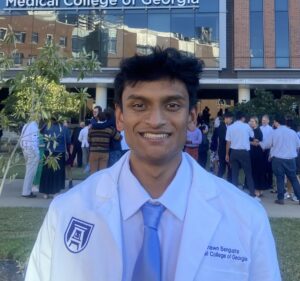

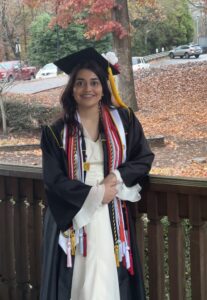
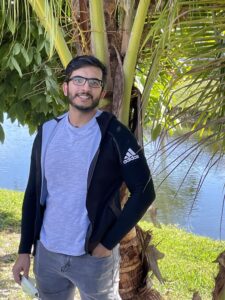
State Lead: Sohawm Sengupta
Georgia Committee Members: Aerica Worrell, Diya Patel, Arman Seth
Georgia expansion is supported through the state AHEC network and Rural Health Transformation Fund resources.
AHEC coordination has proven critical in identifying deployment sites and strengthening partnerships.
Illinois expansion began when Avery O’Keese, third-year medical student at the University of Illinois Rockford Campus pursued IRB approval and launched deployment at senior resource centers.
This confirmed the model’s academic scalability and student-driven expansion potential.
Oscar Cazares
Malik Evans
Arman Seth
The intern team supports communications, logistics, expansion coordination, and training facilitation.
Get Involved
Rural Ready Pipeline
Builds a strong future rural workforce through mentorship, exposure, and partnerships like AHEC, connecting students to careers in rural medicine while expanding access to care.
Featuring leaders like Dr. Callins and upcoming summit opportunities, it equips students to engage and lead in rural health.
Join the Corps
Students can get involved by leading deployments, supporting outreach, facilitating trainings, engaging on social media, and building community partnerships.
Gain hands-on experience in project management, teaching, community health, advocacy, and national program development.
Partner With Us
We partner with AHECs, FQHCs, rural hospitals, libraries, community organizations, nonprofits, and funders to expand rural health access.
To explore partnership or funding opportunities, contact:
Kendra Robinson: drhcfellow@amsa.org
Angela: awalseng@

© 2025, American Medical Student Association, McLean, VA