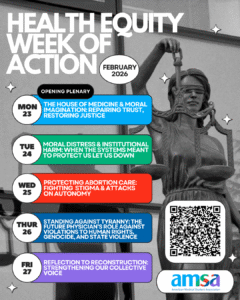

Day 1: Opening Plenary
From an early age, medicine may have held a place of reverence in your heart, your aspirations, and in the vision you had for the type of system you would be inheriting as a future physician. Perhaps you’ve defined this vision as a house built upon science, truth, service, trust, accountability, compassion- with a bold devotion to doing no harm. However, how do we make sense of a system that holds such power and potential beauty- and yet, has historically been built upon exclusion and a lack of safety for the very communities it claims to be committed. Here at AMSA, we question the field we have chosen- we think critically- and we believe in something greater. We aspire to be clinicians who pose the difficult questions and ponder the equally difficult solutions- such as the sacred key that accountability and the courage to name what is wrong holds.
Thus, what does it mean to inherit a system that has both healed and harmed- and in the time we are living in, where attacks to equity, inclusion, moral dignity, and human rights are occurring on all fronts- how do we re-imagine what this place could be? We are allowed to ask for more… in fact- we must demand it.
Session 1: The House of Medicine & Moral Imagination: Repairing Trust, Restoring Justice
Session 2: Defending Access and the Fight for Equity: Navigating the Impact of HR1 Cuts on Healthcare for Transgender, Immigrant, and Underserved Communities
Session 3: AMSA Community Building: Connection, Community & Care
Day 2: Moral Distress & Institutional Harm: When the Systems Meant to Protect Us Let Us Down
As we reflected upon in our opening plenary, we enter medicine imagining a sanctuary- a house and body of healing where our foundational oaths to protect and uplift are met with systems that echo with institutional racism, structural disparities, and historical harms painted with the falsehoods that these relics are of the distant past. In this time of grief and mounting assaults on the very threads that make us human, we can refuse to allow such betrays to calcify us into silence. When we name them, this can become fertile ground for reparative action- ones that do not demand that we normalize harm as the cost for belonging. That is the very thing about belonging- it need not require any effort-but is simply a right each of us deserves. Together, we can take our first breath of reclamation, as we call out to courage and acknowledge the sacred tension between what we are taught to endure and what our nervous systems have always refused.
We trace the path of moral distress as an architectural design of exclusion that we will not accept. Organized refusal can appear to us in many ways, such as the gentle balm of gathering in community, in writing, reading, poetry, the arts, and beyond. We can fight the exhaustion of institutional harm through honoring the body’s wisdom, normalizing seeking support and the power of respite, and summoning the alchemy of collective care.
As poet and activist June Jordan first spoke….
“we are the ones we’ve been waiting for.”
Session 1: Building the World We Dream: Centering Joy, Grief, Creativity, and Community in Healthcare Activism
Session 2: Breaking the Silence: Building a Culture of Care and Destigmatizing Mental Health in Medicine
Session 3: Healing the Healers: Reclaiming Moral Integrity in the Fight for Equity
Session 4: AMSA Community Building: Connection, Community & Care
Day 3: Protecting Abortion Care: Fighting Stigma & Attacks on Autonomy
We have named the house of medicine’s harms and by day 3 of HEWA, we have begun to tend towards these ruptures through uplifting organizations and activists who have centered their lives to rewrite the narratives of oppressive. Thus, here, we turn to one of the most urgent threats towards autonomy and Justice- reproductive freedom and abortion care. In this time of escalating state surveillance, bodily oppression, and the criminalization of patients and providers, the sacred human right of choice has long been under threat. As future clinicians, we can continue the refusal we outlined in our opening plenary- we can claim the truth, which is that abortion is healthcare, it is justice, and it is that very right to decide that all deserve.
To protect this care, we can learn from legislative strategies, community defenses against shame, and the reclamation of narrative from those who wish to silence it. Together, we can interrupt this system- through policy, presence, and dignity.
Session 1: From the Clinic to the Capitol: Defending Abortion and Reproductive Justice with the Freedom Caucus
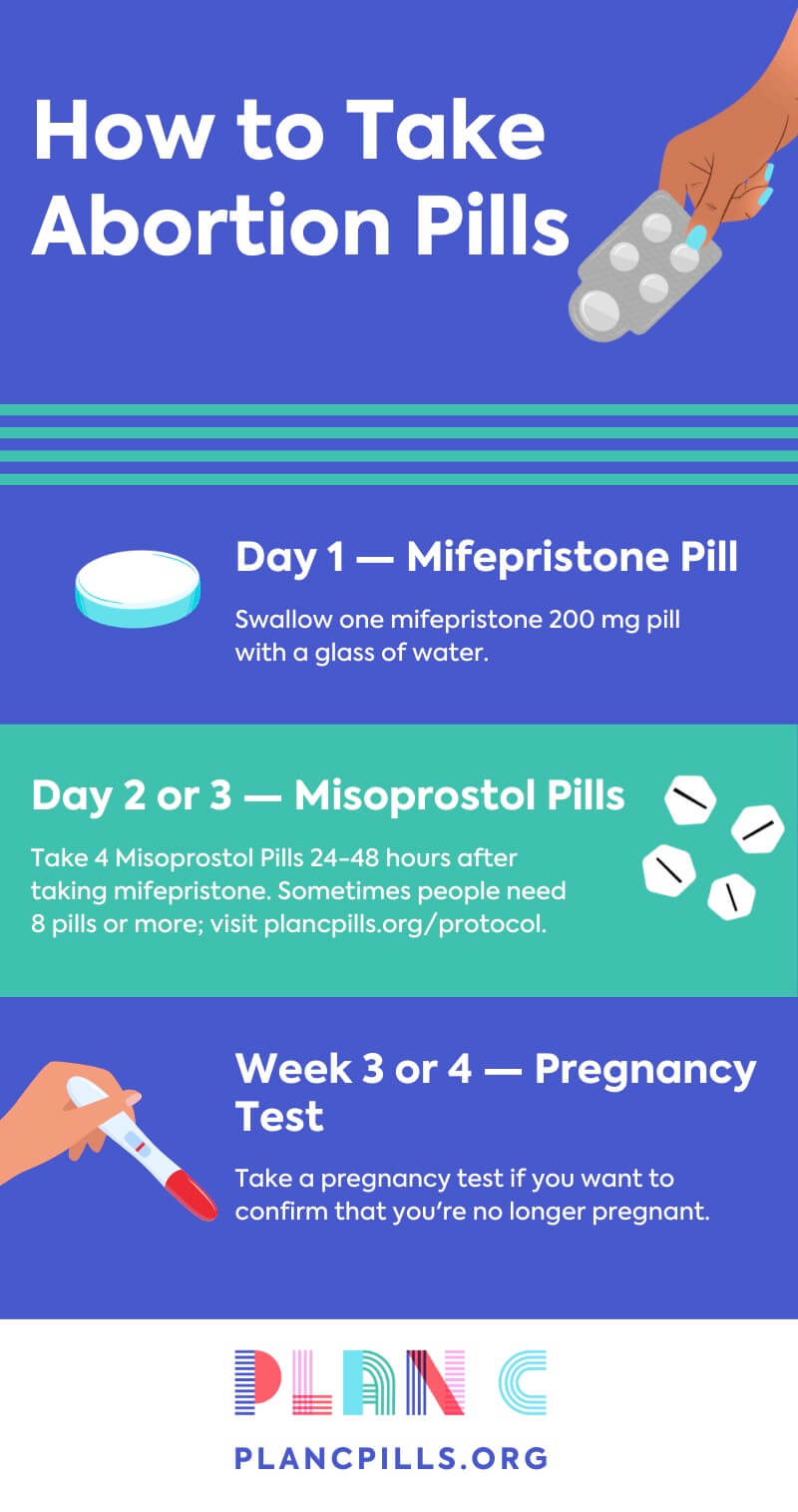
Session 2: Demystifying Self-Managed and Medication Abortion: What Future Clinicians Need to Know
Note: Previous title verbiage still applicable
Session 3: AMSA Community Building: Connection, Community & Care
Note: Healing Circle Moved to 3/4 but will retain Community Building Hour
Healing Circle Edition for students, trainees, and clinicians will now take place next Wednesday, 3/4 at 8:00 PM ET .
This healing circle is rooted in an ancient technology used across cultures: for eons, humans have gathered in circle to heal, reveal, and reconnect. This particular offering emerges from The Healing Circle for Healthcare Workers and the framework of Circle Alchemy, created by Annelle Taylor, a Nurse Practitioner in community with other healthcare providers during the height of the COVID pandemic, amid collective loss and racial violence — when it became clear that healthcare workers needed spaces to metabolize what we were carrying, not alone, but in community.
This is not a lecture.
There’s nothing to prepare and nothing to perform.
You’re welcome to come exactly as you are.
The art of medicine is being practiced amid profound grief, moral injury, systemic violence, and relentless pressure to keep going — even as our bodies, hearts, and nervous systems ask for something different. In the context of what’s unfolding in the wider world, this is a recipe for burnout.
And yet — we are needed.
Our medicine is needed.
Many of us have learned to override our own needs in order to care for others. We push through exhaustion, numb our own pain, and keep moving for the sake of our patients, our teams, and the work we love.
And here we are again, at a moment that asks something deeper of us.
**To honor the safety and presence of this live experience, the gathering will not be recorded and there will be no replay. This is a live, relational transmission.
During this 90-minute gathering, we will:
To attend, please register for the free healing circle here in order to receive the calendar invite and zoom link.
Day 4: Standing Against Tyranny: The Future Physician’s Role Against Violations to Human Rights, Genocide, and State Violence.
Arriving into day 4 of HEWA, we have held medicine’s ruptures, questioned what reparative processes could embody-and were introduced to threats of autonomy on patient choice. Now, we meet this moment with important and clear language- the tyranny that is palpable from every angle in this administration. From cruel, mass deportations sweeping communities, to ICE raids storming every corner of what once were sanctuaries, we witness tyranny again not as a distant history, but as a present threat to the democracy we stand for. While human dignity is stripped under the guise of “security” and “protection,” we distort the truth of what we are facing.
As future physicians, what is our role in human rights? Our relationship to the perpetuation of falsehoods that permit the dehumanization of minoritized and migrant populations? When cruelty masquerades as policy- what side of history will we be on?
These questions can be daunting, and it is in that very tension that we find the truest answers. It is in our training and preparedness to face tyranny that we can organize louder, love louder, and deliver justice to the ends of every community.
On day 4, we will learn from key activists that can blend this need for issue-based education on anti-ICE practices and war crimes attacking the most vulnerable- and mobilize us to learn and act from a place of care and strategy.
Session 1: Immigration Justice is Public Health
Session 2: Abolishing Medical Complicity: Confronting Genocide and Crimes Against Humanity
Session 3: Protecting Patients & Providers: Abolitionist Healthcare Responses to the Harms of ICE in Hospital Settings.
Session 4: AMSA Community Building: Connection, Community & Care
Day 5: From Reflection to Reconstruction- Strengthening Our Collective Voice
Arriving at our final day for HEWA, we have been interrupters of the very system we were asked not to question. Now, we turn from reflection to reconstruction, weaving our shared outrage and dreams into collective transformation. We stand in a different place than where we began. We have named the cracks in the house we inherited, listed to stories of distress and the silencing we will not stand for, and witnessed how advocacy and policy can position us to fight back. Across these last several days, a quiet throughline has hopefully emerged- we are not only inheritors of a system or the world, we are shapers for what can come next.
This capstone is an invitation to carry this realization forward. The questions we have asked together- surrounding abolition, autonomy, tyranny, care, Justice, compassion, and more- are not meant to remain tethered to the themes we have encountered together. Instead, these are seeds for further discussion and for sacred spaces we will continue to build and return to. Reconstruction begins when we center storytelling and the voices of those most affected by the structures we have built. Reconstruction continues when we refuse anything but truth-telling, when we stand alongside those who need our care most- and when we decide that we can practice medicine with the integrity we dream to.
Today, we will sit in discussion of what is possible when we lead with this belief. We will learn tangible skills to bring our advocacy forward- to foster, nourish, and grow our voices in ways that are allowed to feel frightening or risky. Again, it is within this very tension that we find the joy of what what medicine can be- a shared devotion to keep listening, learning, and valuing each and every human voice.
Session 1: Closing the Gap: Building a More Equitable Donor Registry
Session 2: Organizing for the Common Good
Session 3: Mobilizing for Truth: Protecting Healthcare Equity & Access in an Era of Disinformation
Session 4: AMSA Community Building: Connection, Community & Care
Day 1: Introduction to Abolitionist Medicine: A Necessary Unraveling
From an early age, we learn cause and effect—touch a hot stove, feel pain. As healthcare professionals, we’re trained to search for the causes of symptoms. Yet when it comes to systemic health inequities, why do we settle for treating the effects rather than dismantling the root causes? Why do we accept band-aid solutions to maternal mortality, food deserts, and medical neglect while leaving the underlying structures intact?
Day 2: Encoding Racial Equity into Clinical Algorithms & Practice: Minority Stress & Racism in Medicine
We bring in day 2 by exploring the critical issues of race-based medicine, the use of antiquated race in clinical diagnostics, and the impact of minority stress on health outcomes and quality of life. The sessions will delve into the harmful effects of racial bias in medical algorithms and discuss strategies for promoting equity in clinical decision-making. Participants will gain insights into dismantling race-based practices in healthcare which perpetuate cycles of harm and addressing the root causes of health disparities among minority populations. Further, future clinicians will get a chance to identify and adopt a curious lens regarding the impact of this upon mental health outcomes as well.
About the speakers:
Day 3: Affirming Care Practices: Timing, Trauma, and Empowerment
Every medical student remembers the first time they stepped into an OSCE, heart pounding, rehearsing the right questions, the right responses—what to say and what not to say. But real patients aren’t standardized. They don’t follow a script, and their histories don’t fit neatly into checklists. What medical school often forgets to teach us is that the way we listen matters just as much as what we say or do. Trauma-informed care (TIC) is more than a checklist—it’s about timing, power, and creating a space where patients feel heard and safe.
Day 4: Narrative Medicine- More than Words
Medicine is more than diagnoses and treatments—it is a collection of human stories. Every symptom is part of a larger narrative, and the way we listen, interpret, and respond shapes the care we provide. Yet, language in medicine is often wielded as a tool of power, sometimes dehumanizing patients or reinforcing bias. How do the words we choose impact trust, agency, and healing? How can narrative medicine help us see patients not just as cases, but as whole people?
Day 5: The Unwritten History of Moral Medicine: The Human Rights Agenda
Michaela Whitelaw is a 4th year medical student at Emory. Prior to medical school she was an AmeriCorps VISTA volunteer in Philadelphia then spent two years in the Peace Corps Dominican Republic as a Community Health Promoter. Upon returning to the U.S., she worked part time at a medical legal partnership serving first-time mothers, worked as a Family Services Case Aid with World Pediatric Project and volunteered with a Latinx community health clinic in Philadelphia. Most recently she studied for an MPH in U.S. health policy and focused her thesis on menstrual equity. She’s passionate about incorporating medicine, advocacy, policy and education to address promote health equity and social justice.
While in medical school she has been involved in student groups, advocacy, volunteering, research, and electives focusing on immigrant health and ICE detention, individuals who are incarcerated, individuals experiencing houselessness, voting rights, DEI initiatives within our school, and other issues relating to health equity and social justice.
Reproductive Justice is often defined as the human right to maintain personal bodily autonomy, have children, not have children, and parent the children we have in safe and sustainable communities. Over the past few decades, increasingly restrictive policies have passed that have limited individuals’ access to essential reproductive care, particularly abortion care. Various states have limited public funding for abortion care, enacted policies that misguide and deter women from pursuing abortions, and limited access to such abortion means. Learn more about this topic by viewing the resources below and join us for a conversation with our invited speaker.
HEWA 2022 Reproductive Justice Toolkit
Resources to learn more:
Action items:
Across medical institutions and programs, there is a significant underrepresentation of BIPOC and other minorities. Many factors contribute to this reality, including the substantial cost of a medical career, including high preparatory and exam fees, medical school tuition, access to preparatory tools, and bias in the selection process. The lack of diversity in medical environments exacerbates biases in the delivery of care and perpetuates distrust in medical systems. To equitably serve patients from different backgrounds, address the disparities in healthcare, and dismantle racism in medicine it is essential that the medical workforce reflects the diverse community it services. As future physicians, we have a unique responsibility to use our voice to advocate for increased representation in medical programs and institutions. Learn more about this topic and how you can take action by reviewing the information below.
Diversity and Equity in Medicine Toolkit
Resources to learn more:
Action Items:
Immigrant and Refugee Health
Resources:
Action Items:
Whether it is access to water, food, energy, or overall quality of life, there is an imbalance around the world. Environmental factors can lead to health disparities and give unequal access to various populations. As future physicians, it’s essential to understand how environmental factors impact patients. Environmental justice acknowledges that underserved, impoverished, and minority communities are disproportionately exposed to greater pollution levels and harmful environmental conditions, which confer worse health outcomes. Native communities tend to be some of the most disadvantaged and disproportionately impacted by environmental injustice. Use the resources below to learn more about this critical topic and how you can advocate for environmental justice.
Key Points to Know
Action Items:
Microaggressions
Microaggression is defined as a discriminatory offense towards an individual based off of their race, gender, or any marginalization. The term was coined by an African American Psychiatrist in 1970 to help encourage dialogue in regards to any harms that nondominant groups in medicine face.
Resources to learn more
Key Points to Know
Action Items
Across the country, Black mothers are subject to maternal health challenges at alarmingly high rates, and Black women overall suffer disproportionately from a lack of access to quality reproductive care. Today we will dive into the sources of these disparities, and discuss what you can do to help reduce this health gap.
Resources to learn more:
Action Items:
Today we will explore the unique healthcare disparities immigrants and refugees face in the United States. The USA is home to more immigrants than any other country—about 46 million, just less than a fifth of the world’s immigrants. In recent decades, several policy and regulatory changes have worsened health-care quality and access for immigrant populations. These changes include restrictions on access to health insurance programs, rhetoric discouraging the use of social services, aggressive immigration enforcement activities, intimidation within health-care settings, decreased caps on the number of admitted refugees, and removal of protections from deportation. Perhaps the clearest example of this is in the separation of children from their parents at the U.S. Southern border this past year.
Resources:
Action Items:
From undergraduate school to medical school, there’s a lack of diversity in both the students and physicians. We will be looking at the race disparities statistics in medical school applications and how it continues on throughout the whole health care system. We’ll explore how and why it is important to decrease the racial gaps to further improve patient health care access and experiences.
Resources:
Action Items:
Today we will explore how race and genetics are discussed in the medical field. Often during the first few years of medical school, students are taught to generalize and associate. For example, if you hear “black” in a question, you’re told to select “sickle-cell.” The problem with that association is that it could lead to misdiagnosis and missed diagnoses. Because sickle-cell protects against malaria, it may also be seen in other populations such as in Greece. Today’s focus is exploring the impact science has had on replacing ideas of race as biological.
Resources:
Action Items:
As we have discussed throughout this week, health disparities are prevalent across our healthcare system. As the U.S. population becomes increasingly diverse, they are likely to increase if not adequately addressed. One way to address these disparities is through cultural competency. Cultural competency can increase patient engagement, utilization of preventive services, treatment adherence rates and overall health status. As the population becomes more diverse, it is a social justice imperative that health care providers, employers, and health plans recognize the need to deliver culturally competent care and services to improve health outcomes, lower the total cost of care, and improve patient satisfaction.
Key Definitions:
Cultural competence is the ability to interact effectively with people of various racial, ethnic, socioeconomic, religious and social groups. Working towards cultural competence is an ongoing process, one often tackled by learning about the patterns of behavior, beliefs, language, values, and customs of particular groups.
Cultural humility involves an ongoing process of self-exploration and self-critique combined with a willingness to learn from others. It means entering a relationship with another person with the intention of honoring their beliefs, customs, and values. It means acknowledging differences and accepting that person for who they are.
Source: https://soundscapingsource.com/cultural-humility-vs-cultural-competence/
Action Items:
Today, we explore how race and genetics are taught in medical school. Often during the first few years of medical school, students are taught to generalize and associate. For example, if you hear “Black” in a question, you’re told to select “sickle-cell”. The problem with that association is that it could lead to misdiagnosis and missed diagnoses. Because sickle-cell protects against Malaria, it may also be seen in Greek populations and others. Today’s focus is exploring the impact science has had on replacing ideas of race as biological.
Activities:
– Host this activity with your chapter at a luncheon or chapter meeting
– Learn more about why we need to rely more heavily on genetics and less on skin color and race by watching these TED talks: The Biology of Race in the Absence of Biological Races, and What’s Race Got to Do with Medicine?
– Ask a doctor about their thoughts on viewing race as a risk factor and if it helps or hurts us in caring for diverse populations
If you’ve ever experienced any race-related issues during your undergraduate education, you might be surprised to know they often continue into medical school. Today, we explore how a student’s race might come into play in everything from professors treating a medical student differently in a lecture hall to race issues within the hospitals. Why are professors in today’s education system still hold these biases? What biases might we hold, and what can we do about them?
Activities:
– Premeds! Check out this interesting Op-ed: How To Tell If Your Program’s Diversity Is a Hologram
– Check out this M.D.’s view on race’s importance in the hospital
– Learn about a physician’s perspective on White Privilege in a White Coat or another physician’s What It’s Like to Be a Black Man in Medical School
– Reflect on your personal encounters with disparities (i.e. being of a minority population and pursuing medicine), or stories that you’ve heard from friends, family, acquaintances
Today we seek to provide evidence that race is a social construct. Too often, people don’t give a second thought when asked to self-identify, however, we should stop and consider how these lines are made up artificially. Why are they made up? Who stands to benefit from these classifications?
Activities:
– Learn about How the Jews Became White Folks.
– Understand exactly Who Invented White People.
– Reflect on the first article provided for today. How fair is it to say that Jews became successful due to their own abilities and efforts? To what degree did government programs play a part in this upward mobility?
– Learn about your own biases by taking this quick assessment: – Take “Race” and “Arab-Muslim” implicit bias tests here: Implicit Association Tests. Do you believe these tests? How will knowing these biases change the way we approach patient care, if at all?
Did you know that even though 39% of full-time faculty are female; female faculty from some racial minority groups continue to be underrepresented in academic medicine? Only 4% of full-time faculty identify as Black or African American, Latino or Hispanic, Native American or Alaska Native, or Native Hawaiian or Pacific Islander females.1(AAMC) As time has passed, there has been a rise of physicians from underrepresented minority groups which ultimately contributes to a decreasing health disparities gap; however there remains a large need for more minority physicians and minority physician leaders.
Activities:
– Learn about Current Trends in Medical Education1, as it relates to physician diversity and demographics
– Interview a doctor on this topic
– Volunteer at an underserved community health clinic
With our overall goal of decreasing health disparities and increase the number of physicians of color, today we focus community outreach. We would like to make high school students and undergraduate students aware that there are diversity offices in medical schools.
Activities:
– If you are a medical student, contact your medical school’s diversity office and request pamphlets/scholarship information. Disseminate this information to nearby colleges and high schools in impoverished areas. You could talk to the career advice office of high schools and ask them to host you to answer questions for interested students.
– If you are a college student, contact a nearby medical school’s diversity office and request pamphlets/scholarship information. Disseminate this information to your classmates through your local AMSA chapter. Go into the community and deliver this information to high schools.
– Take a moment and reflect on information from this week. What will you do differently from now on, if anything?